Salvation Army shops get Environmental and Sustainability Award
Charity Retail Association award highlights measurable carbon reduction through new ways of working or improvements to existing operations.
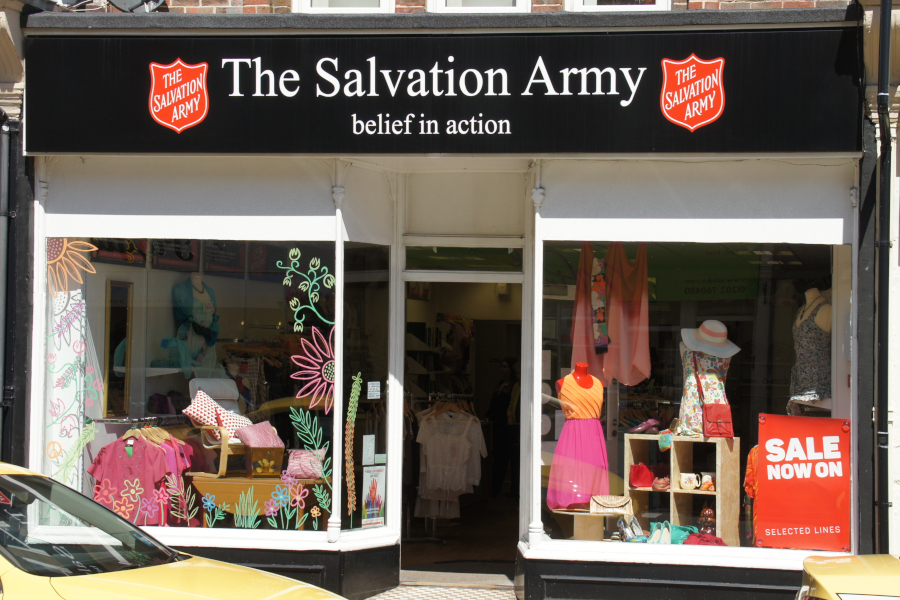
There are more than 10,000 charity shops in the UK, employing 87,200 volunteers and 26,100 staff. (Photo: Alwyn Ladell, via Flickr CC BY-NC-ND 2.0)
The Salvation Army's trading company has won the Charity Retail Association's annual award for environmental sustainability.
The Salvation Army Trading Company Ltd (SATCoL) is the largest charity-owned textiles collector in the UK. It operates some 250 shops on behalf of The Salvation Army. SATCol recently announced its highest trading results and a record-breaking donation to its parent charity of over £11.2m.
The Charity Retail Association's Environmental and Sustainability Award is for charities that can demonstrate measurable carbon reduction through new ways of working or improvements to existing aspects of the retail operation that reduce its carbon footprint.
Recycling a part of core strategy
In 2022, SATCoL launched a five-year strategic plan with new performance measures for people, planet and profit. It recently launched a procurement sustainability programme that sets out minimum environmental standards for procurement.
Majonne Frost, Head of Environment and Sustainability at SATCoL, said: “A core part of our strategy is to enable and encourage people to reuse and recycle more.
"As well as offering convenient ways to do this through our stores, we are also making positive changes through our processes and suppliers. This has seen over 1.5m plastic bags removed from our retail operations and the conversion to LED lighting in our stores." 99% of Salvation Army shops now have LED lighting, and 100% of their electricity is sourced from certified renewables via their energy supplier.
A wide range of initiatives
The company runs an Energy Efficiency training course which has been completed by 451 people. SATCol also hosts Repair Cafés and Sally Salvage events where useful unsold household items are given away free of charge. Together with the Salvation Army it hosts school uniform pop-up shops to offer free school uniforms.
SATCoL has invested heavily in world-leading innovations, including Fibersort, the UK’s only automatic sorting process that accurately identifies and sorts second-hand garments by fibre type.
Its Project Re:claim is the world’s first commercial-scale polyester recycling plant designed to recycle end-of-life textiles. The plant will recycle post-consumer garments and other textiles and supply the raw material back into the fashion and textile industries.
Salvation Army's environmental commitments
The Salvation Army is a worldwide Christian church and registered charity with more than 650 churches and community centres in the UK and Ireland. It is best known for its work on homelessness, and every night, it provides shelter for 3,000 people who are experiencing homelessness.
To demonstrate its commitment to the environment, the Salvation Army has chosen to be certified under IS014001, the International Standard for Environmental Management Systems. It publishes its Environment and Sustainability policy online.
The Salvation Army says it seeks to foster a culture of sustainability with a focus on long-term environmental solutions. The charity says it aims to implement sound environmental policies and practices, including via:
- the construction and maintenance of buildings,
- assessment of the impact of vehicles used for transportation,
- scrutiny of long-distance travel,
- purchase of supplies that have been assessed for their environmental impact,
- environmentally responsible waste management, and
- development of innovative ways to enhance the sustainability of our use of the Earth’s natural resources.
The Charity Retail Association is the UK trade association for charity shops. The charity shop sector generates more than £387m surplus funds per year from more than a billion pounds of turnover, and harnesses the skills of more than 187,200 volunteers around the country.