Call for urgent action on workplace ventilation
New research raises concerns about indoor air quality in working environments.
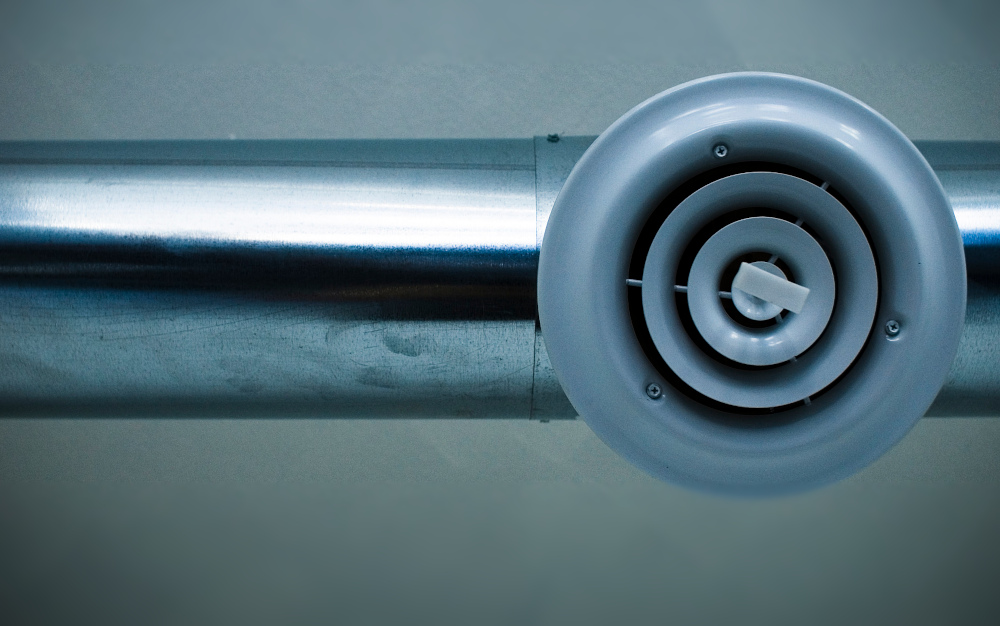
Many office buildings rely on ventilation systems to circulate and clean the air (Photo: Paul Goyette via Flickr CC BY-NC-SA 2.0)
The British Council for Offices (BCO) has issued a new technical research paper on office ventilation, warning that many offices don't have adequate ventilation to prevent the spread of the coronavirus.
The health of the office working environments can impact employee health and productivity. Managing office environments is a major legal obligation for employers, and is primarily governed by health and safety legislation.
Before COVID, concerns about the health of office working environments largely related to ergonomic and musculoskeletal issues, as well as noise, thermal comfort and eyestrain. Now ventilation is a key focus.
Research recommends a new focus on air quality
The research paper, entitled ‘Thoughts on ventilation design and operation post COVID-19’, is aimed at building owners, managers and operators of non-domestic buildings.
It recommends the following:
- All occupied and transient spaces within offices should be provided with good levels of outdoor air ventilation.
- Particular attention should be given to high occupation density spaces such as conference suites, social hubs and meeting rooms to ensure they have an adequate outdoor air supply and exhaust air ventilation.
- Avoiding the use of air recirculation in central ventilation plants.
- Providing facilities management professionals with appropriate training and educational resources to help them to address indoor ventilation challenges effectively and to ensure systems are properly maintained and their performance monitored.
- Air quality monitoring should be continuous, and CO2 levels should be maintained below 1000 ppm.
The paper summarises advice on operating existing ventilation systems issued by the Federation of European Heating, Ventilation and Air Conditioning associations (REVA). The paper is free to download from the BCO website (registration required).
The report's lead author, Derek Clements-Croome, Professor Emeritus at University of Reading, said: “Ensuring a high standard of indoor air quality may be the most important thing we can do to fight COVID-19, combined with social distancing, washing our hands and wearing masks. Yet too many UK offices have inadequate ventilation.“
He added: “Germany is providing finance to upgrade ventilation systems in buildings, and the UK Government should consider doing this too.”
Germany last year announced £450m in grants to improve air circulation in public offices, museums, theatres, universities and schools. The money is intended to help facilities staff in public buildings upgrade existing air conditioning systems. Funding is also available for CO2 sensors that indicate when the air in a room is unhealthily stale.
How can you tell if an office is badly ventilated?
The Health and Safety Executive has published guidance on ventilation and air conditioning during the coronavirus. This includes advice on how to identify poorly ventilated areas. It building managers should:
- Look for areas where people work but there is no mechanical or natural ventilation, such as openable windows, doors or vents, etc.
- Check that mechanical systems provide outdoor air, temperature control or both. If a system only recirculates air and has no outdoor air supply, the area is likely to be poorly ventilated
- Identify areas that feel stuffy or smell bad.
The HSE says building managers can use carbon dioxide (CO2) monitors to help decide if ventilation is poor. However it notes that CO2 monitors are less effective in areas used by few people.
Sick building syndrome as a precursor
The issue of "sick building syndrome" (SBS), also related to poor air quality, first came to prominence in the 1970s. Symptoms include headaches, fatigue, eye/throat irritation, and skin rashes.
The World Health Organization recognised it as a medical condition in 1992, and the UK's Health and Safety Executive has published guidance on how to manage the issue.
SAGE calls for advice for facilities managers
The Government’s Scientific Advisory Group for Emergencies (SAGE) last September published a detailed report on the role of ventilation in controlling covid transmission. The report says ventilation should be integral to the COVID-19 risk mitigation strategy for all multi-occupant public buildings and workplaces. This should include the identification of how a given space is ventilated and an articulation of the strategy that has been adopted to ensure the ventilation is adequate.
The SAGE document says more sector-specific guidance is needed for facilities managers and professional engineers. It says guidance will need to be supported by professional engineering and facilities management bodies and an appropriate campaign for industry.
Technical input needed on large systems
The United States Environmental Protection Agency (EPA) suggests that the variety and complexity of HVAC systems in large buildings will require professional interpretation of technical guidelines. It recommends upgrading air filters to the highest efficiency possible that is compatible with the system and checking the filter fit to minimise any filter air bypass.
The EPA also suggests that facilities managers may also consider using portable air cleaners to supplement increased HVAC system ventilation and filtration, especially in areas where adequate ventilation is difficult to achieve. It says directing the airflow so that it does not blow directly from one person to another will reduce the spread of droplets that might contain the virus.
But the EPA warns that portable air cleaners alone cannot ensure adequate air quality, particularly where there are significant pollutants and ventilation is insufficient.
What about new 'air-cleaning' technologies?
The BCO research paper discusses the potential of air-cleaning technology to remove viral particles from the air. It notes that some technologies that until now have only been used in the healthcare, food production and pharmaceutical sectors, such as UV irridation, are now being considered for use in commercial buildings. The report urges caution and emphasises that these technology are not a substitute for ventilation and should not be used as a reason to reduce outdoor ventilation rates.
Some experts report that mechanisms that rely on UV-light, ionisation or ozone can actually worsen air quality.